
Boost Workforce Potential: Corporate Training Programs Munich

A diverse group attends a business analysis seminar with a presenter and projection screen in a modern conference room.Photo: Pavel Danilyuk / Pexels

Boost Workforce Potential: Corporate Training Programs Munich

Elevate your team's capabilities and drive organizational success through expertly designed training solutions in Bavaria's capital.

Explore Programs

Key Takeaways

  • ✓ Munich is a hub for innovation, demanding continuous skill development.
  • ✓ Tailored programs deliver higher ROI than generic training.
  • ✓ Employee engagement significantly improves with effective training.
  • ✓ Investing in training reduces staff turnover and attracts top talent.

How It Works

1
Needs Assessment & Consultation

We begin by understanding your organization's specific goals, challenges, and current skill gaps. This involves in-depth discussions with key stakeholders and a thorough analysis of your workforce development needs.

2
Custom Program Design

Based on the assessment, we craft a bespoke training curriculum, selecting relevant modules, methodologies, and expert trainers. Our focus is on practical, results-oriented content tailored for your Munich-based team.

3
Expert Delivery & Engagement

Our experienced trainers deliver engaging and interactive sessions, utilizing modern pedagogical approaches. Training can be conducted on-site in Munich, at a dedicated facility, or virtually, ensuring maximum flexibility.

4
Evaluation & Continuous Improvement

Post-training, we evaluate program effectiveness through feedback, performance metrics, and skill application. This feedback loop ensures continuous improvement and measurable impact on your business objectives.

The Imperative of Corporate Training Programs in Munich's Dynamic Economy
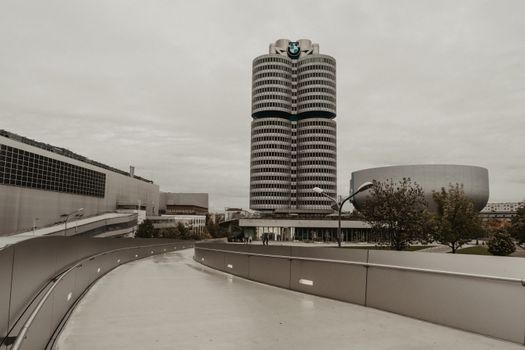
Explore the iconic modern architecture of the BMW headquarters in Munich, Germany.Photo: Masood Aslami / Pexels
Munich, a vibrant economic powerhouse in Germany, stands at the crossroads of tradition and innovation. Its robust industries, ranging from automotive and high-tech to finance and media, demand a workforce that is not only skilled but also adaptable, forward-thinking, and continuously learning. In such a competitive and rapidly evolving landscape, generic training solutions simply won't suffice. Organizations operating in Munich must embrace strategic corporate training programs to stay ahead, foster growth, and maintain their competitive edge. These programs are not merely an expense; they are a critical investment in human capital, directly impacting productivity, innovation, and employee retention. The city's unique economic ecosystem, characterized by a high concentration of global corporations, innovative startups, and cutting-edge research institutions, creates a constant need for upskilling and reskilling. Whether it's mastering new digital tools, enhancing leadership capabilities, or navigating complex international markets, the demands on employees are ever-increasing. Effective corporate training programs in Munich address these demands head-on, providing targeted education that aligns with both individual career aspirations and broader organizational objectives. By investing in their employees' development, companies can cultivate a culture of continuous improvement, foster a highly engaged workforce, and ultimately drive sustainable business success. This proactive approach to talent development is crucial for any enterprise aiming to thrive in Munich's dynamic and demanding business environment. Furthermore, with the accelerating pace of technological advancement, from artificial intelligence to automation, the shelf-life of skills is shrinking. This means that what was considered cutting-edge knowledge just a few years ago might already be obsolete. Therefore, regular and relevant corporate training becomes a non-negotiable aspect of business strategy, ensuring that employees are equipped with the latest expertise to tackle emerging challenges and capitalize on new opportunities. Beyond technical skills, the emphasis is also shifting towards 'soft skills' such as critical thinking, emotional intelligence, collaboration, and creativity, which are increasingly vital in a complex, interconnected world. Companies that prioritize these holistic development programs often see a significant boost in team cohesion and problem-solving capabilities. For more insights on general corporate strategies, explore our resources on corporate development. The benefits extend beyond individual skill enhancement. A well-structured training initiative can significantly improve employee morale and job satisfaction. When employees feel that their company is investing in their future, they are more likely to be loyal, motivated, and productive. This creates a positive feedback loop: engaged employees perform better, contributing to the company's success, which in turn reinforces the value of training. Moreover, in a city like Munich, where the talent pool is highly discerning, offering robust training and development opportunities can be a powerful tool for attracting and retaining top talent. Prospective employees are increasingly looking for roles that offer clear pathways for professional growth. Companies that can demonstrate a commitment to continuous learning stand out in the recruitment market, positioning themselves as employers of choice. Ultimately, the strategic integration of corporate training programs into a company’s HR framework is not just about reacting to market demands but about proactively shaping a resilient, innovative, and high-performing workforce ready for the challenges and opportunities of tomorrow's Munich economy.

Tailoring Training to Munich's Specific Industry Needs and Cultural Nuances

Munich is not a monolithic business environment; it's a tapestry woven with diverse industries, each with its unique demands and cultural nuances. Therefore, effective corporate training programs in Munich must be highly tailored to address these specific contexts. A 'one-size-fits-all' approach is rarely effective and often yields suboptimal results. For instance, a program designed for a high-tech engineering firm will differ significantly from one for a luxury automotive brand or a financial services institution. The language, case studies, examples, and even the pedagogical methods must resonate with the target audience and their operational realities. Understanding the prevalent industry standards, regulatory frameworks, and technological advancements within sectors like automotive (e.g., electromobility, autonomous driving), IT (e.g., cybersecurity, cloud computing), and biotechnology is paramount. Beyond industry specifics, the cultural context of Munich and Germany as a whole plays a crucial role in program design and delivery. German business culture often values precision, efficiency, direct communication, and a structured approach to problem-solving. Training programs should acknowledge and leverage these cultural strengths while also addressing areas where development might be beneficial, such as fostering more agile mindsets, encouraging cross-cultural collaboration in international teams, or enhancing creative thinking. For example, leadership training for a Munich-based team might emphasize servant leadership or transformational leadership styles, but always with an understanding of how these integrate with established hierarchical structures and decision-making processes. Moreover, cross-cultural communication training is vital for companies with international teams or those engaged in global business, helping employees navigate diverse communication styles and avoid misunderstandings. This tailored approach ensures that the training is not just academically sound but also practically applicable and culturally appropriate, leading to higher engagement and better knowledge transfer. The most successful corporate training programs in Munich are those that deeply embed themselves within the specific organizational culture and industry landscape of their clients, rather than imposing generic models. This deep understanding allows for the creation of scenarios and exercises that are directly relevant to the participants' daily work, making the learning experience immediate and impactful. It also means that trainers need to be familiar with the local business environment and sometimes even the local dialect or nuances of communication to build rapport and trust with the trainees. This localized expertise transforms a standard training session into a highly effective development intervention, directly contributing to the strategic goals of Munich-based businesses. Furthermore, the selection of training methodologies also needs to be culturally sensitive. While some cultures might prefer highly interactive, debate-driven sessions, others might appreciate more structured presentations followed by practical exercises. In Munich, a balance is often sought, combining theoretical foundations with hands-on application and case studies relevant to the German market. The emphasis on quality and thoroughness, characteristic of German business, means that training materials must be meticulously prepared, well-researched, and delivered by highly qualified experts. Organizations that partner with training providers who possess this regional and industry-specific expertise gain a significant advantage, ensuring that their investment in employee development yields tangible, measurable results. This bespoke approach to corporate training programs in Munich ensures relevance, drives engagement, and ultimately, fosters a highly skilled and adaptable workforce capable of navigating the complexities of modern business.

Measuring ROI and Ensuring Long-Term Impact of Corporate Training Programs

Investing in corporate training programs in Munich, like any significant business expenditure, necessitates a clear understanding of its return on investment (ROI). It's no longer enough to simply offer training; companies must actively measure its effectiveness and demonstrate its long-term impact on business objectives. This goes beyond mere satisfaction surveys at the end of a course. A robust measurement strategy involves defining clear learning objectives upfront, establishing baseline metrics before training, and tracking key performance indicators (KPIs) post-training. For instance, if a program aims to improve sales skills, relevant KPIs might include increased conversion rates, higher average deal size, or reduced sales cycle time. For leadership training, metrics could involve improvements in team productivity, employee engagement scores, or a decrease in conflict resolution issues. The critical step is to connect the dots between the training intervention and actual business outcomes, providing concrete data that justifies the investment. Effective ROI measurement often employs models like Kirkpatrick's Four Levels of Training Evaluation (Reaction, Learning, Behavior, Results). Level 1 (Reaction) assesses participant satisfaction and engagement. Level 2 (Learning) measures knowledge and skill acquisition. Level 3 (Behavior) evaluates whether learned skills are applied back on the job, which often requires observation, peer feedback, or 360-degree assessments. Finally, Level 4 (Results) quantifies the impact on business outcomes, such as profitability, quality, customer satisfaction, or efficiency. For companies in Munich, demonstrating this tangible impact is crucial for securing continued budget and buy-in for future training initiatives. Furthermore, ensuring long-term impact requires more than just a one-off training event. It involves creating a supportive learning environment within the organization. This includes management buy-in and active participation, opportunities for employees to immediately apply new skills, ongoing coaching and mentoring, and continuous reinforcement through follow-up sessions or access to learning resources. Without this reinforcement, new skills can quickly erode, and the initial investment can be lost. Companies should also integrate training outcomes into performance management systems, rewarding employees for applying new knowledge and skills. For more about effective corporate strategies, check our page on corporate solutions. Many forward-thinking organizations in Munich are now leveraging learning technologies, such as learning management systems (LMS) and data analytics tools, to track training progress, measure skill adoption, and correlate learning activities with business performance. These tools provide valuable insights into which programs are most effective, which employees are benefiting most, and where further development is needed. By taking a data-driven approach to training, companies can continuously refine their programs, ensuring they remain relevant, impactful, and aligned with strategic business goals. The goal is to move beyond simply delivering content to facilitating sustained behavioral change and measurable improvements in individual and organizational performance. This systematic approach to evaluating and reinforcing corporate training programs ensures that they are not just beneficial in the short term but contribute to the long-term growth and success of businesses operating in Munich's competitive market.

Avoiding Common Pitfalls in Corporate Training: Best Practices for Munich Businesses

While the benefits of corporate training programs are undeniable, many organizations in Munich fall prey to common pitfalls that undermine their effectiveness. Avoiding these mistakes is crucial for maximizing your investment and achieving desired outcomes. One of the most frequent errors is a lack of clear objectives. Without defining what specific skills or behaviors need to change, and what business results are expected, training can become directionless and ineffective. Before initiating any program, articulate precise, measurable, achievable, relevant, and time-bound (SMART) goals. Another significant pitfall is the 'sheep dip' approach, where generic training is rolled out to a broad audience without considering individual or departmental needs. This often leads to disengagement and a perception that the training is irrelevant. Customization is key, especially in Munich's diverse industry landscape. Tailor content, examples, and delivery methods to the specific roles, industry, and cultural context of your employees. **Common Pitfalls & Best Practices:** * **Pitfall:** No pre-training assessment. * **Best Practice:** Conduct thorough needs assessments to identify skill gaps and align training with strategic goals. * **Pitfall:** Lack of management buy-in. * **Best Practice:** Secure active support and involvement from leadership, who should champion the training and model desired behaviors. * **Pitfall:** Ignoring the learning environment. * **Best Practice:** Create a supportive culture where employees are encouraged to apply new skills and receive constructive feedback. * **Pitfall:** One-off events without follow-up. * **Best Practice:** Implement post-training reinforcement, such as coaching, mentoring, access to resources, and follow-up sessions. * **Pitfall:** Failure to measure impact. * **Best Practice:** Establish clear metrics (KPIs) and use evaluation models (e.g., Kirkpatrick) to track ROI and program effectiveness. * **Pitfall:** Overlooking trainer quality. * **Best Practice:** Partner with experienced, industry-savvy trainers who can engage participants and deliver practical, relevant content. By proactively addressing these potential issues and adopting best practices, Munich businesses can ensure their corporate training programs are not just well-intentioned but truly transformative, leading to a highly skilled, motivated, and productive workforce.

Comparison

FeatureIn-House TrainingExternal Provider (Munich-based)Online Self-Paced Courses
Customization LevelHigh (if resources allow)Very High (tailored)Low to Medium (generic)
Expertise AccessLimited to internal staffAccess to diverse specialistsVaried, often generalist
Cost EfficiencyHigh initial setup, lower per person for large groupsHigher per person, no setupLow per person, no setup
Logistics & AdminHigh internal burdenHandled by providerMinimal
Networking OpportunitiesInternal onlyPotential with other companies (open programs)None
Latest Methodologies✓ (if updated)
Munich Market Relevance✓ (if local provider)

What Our Readers Say

5 ★★★★★

"Our leadership team underwent a bespoke program on agile methodologies. The trainers understood our Munich-based company's challenges perfectly, leading to a 15% improvement in project delivery times. Truly exceptional corporate training programs in Munich."

5 ★★★★★

"The communication skills workshop was a game-changer for our sales department. We saw an immediate uplift in client engagement and team cohesion. This is exactly the kind of practical corporate training Munich needs."

5 ★★★★★

"Thanks to the tailored data analytics course, our marketing team now leverages insights far more effectively. We've optimized campaigns, resulting in a 20% increase in ROI within six months. The best corporate training programs Munich has to offer!"

4 ★★★★☆

"The customer service training was very informative, although I felt some modules could have been more interactive. Nonetheless, our team reported increased confidence, and customer feedback has improved noticeably."

5 ★★★★★

"As an HR manager, finding relevant and engaging corporate training programs in Munich is crucial. The program on diversity and inclusion was expertly delivered and provided actionable strategies that our entire organization has embraced."

Frequently Asked Questions

What types of corporate training programs are most sought after in Munich?
In Munich, high demand exists for programs focusing on digital transformation, leadership development, agile methodologies, cybersecurity awareness, cross-cultural communication, and specialized technical skills relevant to the automotive, IT, and biotech sectors. Companies seek training that directly addresses evolving industry challenges and skill gaps.
Is it better to choose an in-house or external provider for corporate training in Munich?
The best choice depends on your specific needs. In-house training can be highly customized but requires internal resources. External providers in Munich offer specialized expertise, diverse perspectives, and handle logistics, often leading to higher quality and more impactful results, especially for niche or advanced topics.
How can we ensure our corporate training programs in Munich are engaging and effective?
To ensure engagement and effectiveness, focus on interactive learning methods, practical case studies relevant to Munich's business environment, experienced trainers, and opportunities for immediate application of skills. Regular feedback and follow-up mechanisms are also crucial to reinforce learning and track progress.
What is the typical cost range for corporate training programs in Munich?
Costs for corporate training programs in Munich vary widely based on duration, customization, number of participants, and trainer expertise. Basic workshops might start from a few hundred euros per participant, while extensive, bespoke leadership programs for senior management could range into several thousand euros per day. Requesting detailed proposals is key.
How do corporate training programs in Munich address the challenge of digital transformation?
Munich-based corporate training programs tackle digital transformation by offering modules on AI literacy, data analytics, cloud computing, cybersecurity, and digital marketing. They also focus on developing agile mindsets and change management skills, equipping employees to adapt to and leverage new technologies effectively within their roles.
Who should typically participate in corporate training programs in Munich?
Corporate training programs in Munich are beneficial for a wide range of employees, from entry-level staff needing foundational skills to senior executives requiring advanced leadership and strategic development. Training should be targeted based on individual roles, career paths, and organizational goals to ensure maximum relevance and impact across all levels.
Are there specific regulatory or cultural considerations for training in Germany/Munich?
Yes, German business culture values precision, structure, and direct communication. Training programs should respect these norms. Additionally, data protection (GDPR) and works council (Betriebsrat) involvement can be important considerations, especially for larger organizations, ensuring compliance and employee representation in training initiatives.
What are the future trends for corporate training programs in Munich?
Future trends in corporate training programs in Munich include increased personalization through AI-driven learning paths, greater adoption of virtual reality (VR) and augmented reality (AR) for immersive experiences, a stronger focus on soft skills development, and continuous, micro-learning modules integrated into daily workflows, alongside a persistent demand for sustainability and ethical leadership training.

Unlock the full potential of your workforce with industry-leading corporate training programs in Munich. Partner with experts who understand your unique challenges and deliver measurable results. Contact us today to design a bespoke training solution that drives your business forward.

Topics: corporate training programs Munichemployee development Munichleadership training Munichskill enhancement MunichHR development Germany