Unlocking Growth: Corporate Innovation Programs Germany
corporate innovation programs Germany

Unlocking Growth: Corporate Innovation Programs Germany

Propel your enterprise forward with cutting-edge innovation strategies and partnerships across Germany's vibrant ecosystem.

Explore Innovation

Key Takeaways

  • ✓ Germany ranks among the top global innovators, driven by strong R&D investment.
  • ✓ Corporate innovation programs in Germany often leverage a blend of internal and external expertise.
  • ✓ SMEs are increasingly adopting structured innovation approaches to compete.
  • ✓ Digitalization and sustainability are key drivers for current German innovation efforts.

How It Works

1
Define Strategic Goals

Clearly articulate what innovation means for your organization and align it with overall business objectives. This ensures efforts are focused and deliver tangible value.

2
Establish Innovation Structures

Create dedicated teams, labs, or venture units responsible for driving innovation. This provides the necessary resources and autonomy for new ideas to flourish.

3
Engage Ecosystem Partners

Collaborate with startups, universities, research institutions, and even competitors. Open innovation accelerates learning and expands access to novel technologies and talent.

4
Iterate & Scale Solutions

Implement agile methodologies to test, refine, and scale promising innovations. Continuous feedback loops are crucial for adapting to market demands and achieving successful implementation.

The German Innovation Landscape: A Catalyst for Corporate Success

Explore the iconic modern architecture of the BMW headquarters in Munich, Germany. Photo: Masood Aslami / Pexels
Germany has long been recognized as an industrial powerhouse, a reputation built on engineering excellence, rigorous research, and a commitment to quality. In the 21st century, this foundation is being augmented by a burgeoning focus on digital transformation, sustainability, and disruptive technologies, making corporate innovation programs Germany a critical discussion point for any forward-thinking enterprise. The landscape is rich with opportunities, from established automotive giants pivoting towards electric mobility and autonomous driving, to chemical companies investing in bio-based materials, and mechanical engineering firms integrating AI and IoT into their production lines. This evolution isn't merely about incremental improvements; it's about fundamental shifts in business models, product offerings, and operational efficiencies. What truly sets the German innovation landscape apart is its unique blend of factors. Firstly, there's a strong governmental push, with initiatives like 'Industrie 4.0' and various funding programs encouraging R&D and technological advancement. Secondly, the 'Mittelstand' – Germany's backbone of small and medium-sized enterprises – often demonstrates remarkable agility and a deep-seated culture of innovation, providing a fertile ground for partnerships and new ideas. Many large corporations are now actively seeking to tap into this dynamism through structured programs, incubators, and corporate venturing units. These programs are designed not just to identify novel solutions but also to instill an innovation-first mindset throughout the organization, breaking down traditional silos and fostering cross-functional collaboration. The goal is to move beyond mere R&D departments and create an ecosystem where innovation is a continuous, integrated process, driving sustainable competitive advantage in a rapidly changing global market. Understanding these nuances is paramount for any company looking to embark on or optimize its innovation journey within Germany. Corporate innovation is not just a buzzword here; it's a strategic imperative.

Types of Corporate Innovation Programs Thriving in Germany
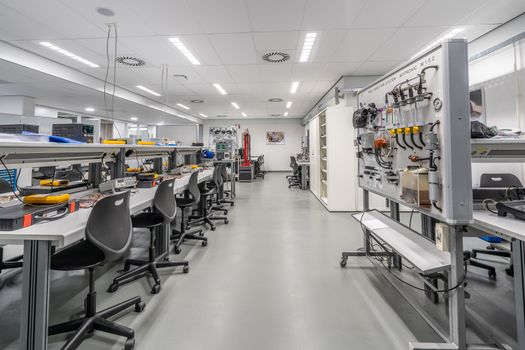
Spacious modern laboratory with workstations and equipment, ideal for scientific research and experiments. Photo: Mike van Schoonderwalt / Pexels
Corporate innovation programs in Germany are diverse, reflecting the varied needs and strategic objectives of different industries and company sizes. While some corporations opt for internal incubators and accelerators, nurturing ideas from within, others lean heavily on open innovation models, leveraging external expertise. A prevalent model is the 'corporate accelerator,' where established companies partner with early-stage startups, providing mentorship, resources, and often seed funding in exchange for equity or strategic collaboration. These accelerators often focus on specific technology areas relevant to the parent company's future, such as AI, blockchain, advanced manufacturing, or green technologies. Examples include programs run by major automotive manufacturers exploring future mobility solutions or chemical companies investigating sustainable materials. Another significant approach involves 'corporate venture capital' (CVC) units. These units act as strategic investors, acquiring minority stakes in promising startups that align with the corporation's long-term vision. Unlike traditional venture capitalists, CVCs often bring not just capital but also market access, industry expertise, and potential for future partnerships, creating a win-win scenario for both the startup and the corporate parent. Beyond direct investment, many German corporations are engaging in 'innovation labs' or 'innovation hubs,' often situated in vibrant startup ecosystems like Berlin, Munich, or Hamburg. These labs serve as experimental playgrounds, allowing dedicated teams to explore radical ideas, prototype solutions quickly, and collaborate with external partners free from the constraints of daily operations. Furthermore, 'hackathons' and 'challenge-based innovation' are increasingly popular, inviting internal employees or external participants to solve specific business problems or develop new product concepts within a limited timeframe. These diverse program types underscore a strategic understanding that successful innovation requires flexibility, collaboration, and a willingness to explore beyond traditional boundaries. Each program type serves a distinct purpose, contributing to a holistic innovation strategy that drives growth and resilience.

Challenges and Opportunities for Corporate Innovation in Germany

A stunning view of a modern glass skyscraper in Berlin, showcasing architectural design and urban development. Photo: Travel with Lenses / Pexels
Despite its strong innovation foundation, corporate innovation programs Germany face their unique set of challenges. One significant hurdle is often organizational inertia and cultural resistance to change within large, established corporations. Traditional hierarchical structures and risk-averse mindsets can stifle experimentation and slow down the adoption of new technologies or business models. Overcoming this requires strong leadership commitment, a clear communication strategy, and the implementation of agile methodologies that empower smaller, autonomous teams. Another challenge lies in effectively integrating external innovations into the core business. While partnerships with startups are valuable, the 'not invented here' syndrome or difficulties in scaling pilots can prevent successful integration and widespread impact. Bridging the gap between the fast-paced startup world and the often-slower corporate environment demands dedicated integration teams and flexible governance structures. Corporate ventures must navigate these complexities carefully. However, these challenges are often accompanied by immense opportunities. Germany's highly skilled workforce, strong research infrastructure (including Fraunhofer Institutes and Max Planck Societies), and robust industrial base provide a fertile ground for technological advancements. The country's commitment to sustainability also presents a huge opportunity for 'green innovation,' with increasing investment in renewable energy, circular economy models, and eco-friendly manufacturing processes. Furthermore, Germany's position as a leading exporter means that successful innovations developed domestically often have a clear path to international markets. The ongoing digital transformation, while challenging, opens doors for new data-driven services, AI-powered automation, and enhanced customer experiences across all sectors. Corporations that can successfully navigate internal resistance, effectively integrate external ideas, and leverage Germany's inherent strengths are poised to not only survive but thrive in the future. The key lies in fostering a culture of continuous learning and adaptation, embracing calculated risks, and viewing innovation not as a separate activity but as an intrinsic part of strategic planning and operational excellence. This proactive approach ensures that German companies remain at the forefront of global competitiveness and continue to drive economic growth and societal progress.

Best Practices for Implementing Effective Corporate Innovation Programs

Team collaboratively brainstorming on transparent board in a modern office setting. Photo: Ketut Subiyanto / Pexels
Implementing successful corporate innovation programs in Germany requires more than just allocating a budget; it demands a strategic, holistic approach. Here are some best practices: * **Secure Top-Level Sponsorship:** Innovation must be championed from the very top. Without executive buy-in and active participation, programs often struggle to gain traction and overcome internal resistance. Leaders need to communicate the vision and commitment consistently. * **Define Clear Innovation Arenas:** Don't innovate just for the sake of it. Focus on specific strategic areas that align with your business goals and where you see significant market opportunities or threats. This provides direction and prevents resources from being scattered. * **Foster an Intrapreneurial Culture:** Encourage employees at all levels to think like entrepreneurs. Provide training, allocate dedicated time for ideation, and create safe spaces for experimentation where failure is seen as a learning opportunity, not a punishment. Reward innovative thinking. * **Build a Diverse Team:** Innovation thrives on diverse perspectives. Assemble teams with varied backgrounds, skills, and experiences. This diversity leads to more creative problem-solving and comprehensive solutions. * **Embrace Open Innovation:** Look beyond your organizational boundaries. Collaborate with startups, universities, research institutions, and even customers. Joint ventures, co-creation workshops, and corporate accelerators can significantly amplify your innovation efforts. * **Implement Agile Methodologies:** Adopt Lean Startup and Agile principles to quickly prototype, test, and iterate on ideas. This reduces time-to-market and minimizes the risk of investing heavily in solutions that don't meet market needs. * **Measure and Learn:** Establish clear KPIs for your innovation programs, but understand that innovation metrics differ from traditional business metrics. Focus on learning outcomes, speed of experimentation, and the quality of prototypes, alongside potential market impact. Regularly review and adapt your approach based on what you learn. * **Allocate Dedicated Resources:** Innovation requires dedicated time, budget, and personnel. Trying to innovate 'on the side of the desk' rarely yields significant results. Create dedicated innovation units or allocate specific percentages of employee time for innovation activities. By systematically applying these best practices, companies in Germany can significantly increase their chances of building robust and impactful corporate innovation programs that drive sustained growth and competitive advantage.

Comparison

FeatureInternal IncubatorCorporate AcceleratorCorporate Venture Capital (CVC)
Risk ProfileLower (internal control)Medium (external partners)Higher (startup investment)
Speed to MarketModerateFast (leverages startup speed)Variable (depends on startup)
Integration DifficultyLower (internal alignment)Medium (cultural bridge needed)High (often separate entities)
Resource IntensityHigh (staff, infrastructure)Medium (program management)Medium (investment capital)
FocusInternal ideas, new business unitsExternal startups, specific challengesStrategic investments, market access
Equity Stake✓ (often small)✓ (minority stake)

What Readers Say

"Our participation in a corporate innovation program in Germany completely transformed our R&D approach. We went from slow, internal development to agile, collaborative projects with startups, accelerating our product pipeline significantly."

Dr. Lena Schmidt · Munich, Germany

"The corporate accelerator program we joined connected us with crucial industry mentors and provided the seed funding we needed. It's a testament to the quality of corporate innovation programs Germany offers."

Markus Weber · Berlin, Germany

"Through our company's innovation lab, we developed a new sustainable packaging solution that reduced material costs by 15% and opened up new market segments within just 18 months. Highly recommend exploring corporate innovation programs Germany has to offer."

Sophia Müller · Hamburg, Germany

"While integrating the startup's technology into our legacy systems was challenging, the strategic insights and innovative solutions gained from our corporate venture partnership were invaluable. It's a long-term play that's starting to pay off."

Thomas Brandt · Stuttgart, Germany

"As a small fintech, being part of a corporate innovation program gave us instant credibility and access to a vast customer base. It's a powerful way for startups to scale and for corporates to stay ahead."

Anna Richter · Frankfurt, Germany

Frequently Asked Questions

What are the primary benefits of corporate innovation programs in Germany?

These programs offer several key benefits, including accelerated product development, access to new technologies and markets, fostering an innovative company culture, talent acquisition and retention, and ultimately, enhanced competitive advantage and sustainable growth for the business.

Is corporate innovation only for large enterprises in Germany?

While large corporations often have dedicated programs, many SMEs in Germany are also actively engaging in innovation through partnerships, government-funded programs, and smaller-scale internal initiatives. The principles apply to companies of all sizes seeking growth.

How can my company start its own corporate innovation program in Germany?

Begin by defining your strategic innovation goals, then consider establishing a dedicated innovation team or unit. Explore partnerships with accelerators or venture capital firms, and foster an internal culture that encourages experimentation and cross-functional collaboration. Seek expert guidance if needed.

What is the typical investment required for corporate innovation programs?

Investment varies widely based on the program's scope, whether it's internal development, external partnerships, or venture capital. It can range from significant internal resource allocation for labs to direct equity investments in startups, often in the millions for larger CVC funds.

How do German corporate innovation programs compare to those in Silicon Valley?

German programs often emphasize deep engineering, industrial applications, and long-term strategic partnerships, leveraging the country's strong industrial base. Silicon Valley programs tend to focus more on rapid digital consumer tech, though both are increasingly converging on global best practices.

Who should participate in corporate innovation programs in Germany?

These programs are ideal for established companies seeking to disrupt their own markets or enter new ones, and for startups looking for strategic partners, funding, and market access. Employees within corporations who are passionate about driving change are also key participants.

What are the risks associated with corporate innovation programs?

Risks include financial investment without guaranteed returns, cultural clashes between corporate and startup environments, potential for intellectual property disputes, and the challenge of scaling successful pilots. Careful planning and risk mitigation strategies are essential.

What future trends will impact corporate innovation programs in Germany?

Future trends include a heightened focus on AI and machine learning, quantum computing, advanced robotics, sustainable technologies, and the circular economy. Programs will also increasingly emphasize ecosystem collaboration and ethical considerations in technological development.

Ready to future-proof your business and unlock new growth opportunities? Explore how tailored corporate innovation programs in Germany can empower your enterprise to lead the way in a rapidly evolving global market. Connect with experts today to design your strategic innovation roadmap.

Topics: corporate innovation programs GermanyGerman corporate innovationinnovation strategy Germanycorporate venture Germanyopen innovation Germany
Leo List
Brampton weed
Adultwork EstrelaBet Vai de Bet R7 Bet Betão Galera Bet Rainbet Bet9ja Shop SportyBet BetKing Sisal Loto Foot Hollywoodbets YesPlay Odibets RushBet Jugabet BetWarrior BetCity MSport betPawa Fortebet