Unleashing Growth: Corporate Innovation Programs Germany
corporate innovation Germany

Unleashing Growth: Corporate Innovation Programs Germany

Propel your enterprise forward with cutting-edge innovation strategies tailored for the German business landscape.

Explore Innovation

Key Takeaways

  • ✓ Germany ranks among the top global innovators, driven by strong R&D investment.
  • ✓ Corporate innovation programs in Germany often leverage a dual approach: internal incubation and external partnerships.
  • ✓ Mittelstand companies are increasingly adopting structured innovation frameworks.
  • ✓ Digitalization and sustainability are key drivers for current German innovation efforts.

How It Works

1
Define Strategic Vision

Clearly articulate innovation goals aligned with overall corporate strategy. This ensures all efforts contribute to long-term business objectives.

2
Establish Innovation Units

Create dedicated teams or departments focused on exploring new ideas, technologies, and business models. These units often operate with more agility.

3
Foster Collaboration

Engage with startups, universities, and research institutions through open innovation models. This injects fresh perspectives and accelerates development.

4
Implement Piloting & Scaling

Test promising concepts through pilot projects and, upon successful validation, integrate them into the core business or scale them as new ventures. This systematic approach reduces risk.

The Imperative of Corporate Innovation in Germany
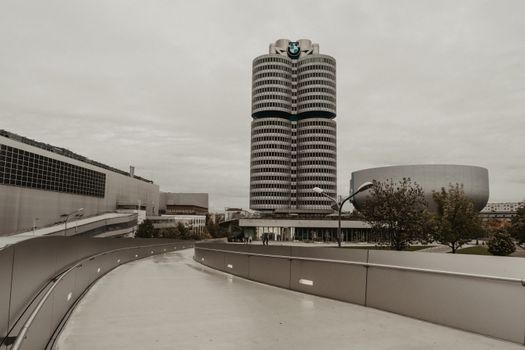
Explore the iconic modern architecture of the BMW headquarters in Munich, Germany. Photo: Masood Aslami / Pexels
Germany, a global economic powerhouse renowned for its engineering prowess and manufacturing excellence, faces an increasingly dynamic and competitive landscape. The traditional strengths that have long underpinned its industrial success – precision, quality, and reliability – are now complemented, and sometimes challenged, by the rapid pace of technological change, evolving consumer demands, and the imperative for sustainable practices. In this environment, corporate innovation is no longer a luxury but a strategic necessity for German businesses, from multinational conglomerates to the agile Mittelstand. Corporate innovation programs in Germany are designed to systematically cultivate new ideas, develop disruptive technologies, and create novel business models that secure future growth and market leadership. The German economy's robust foundation, characterized by strong industry-academia collaboration and significant investment in research and development, provides fertile ground for innovation. However, the challenge lies in translating this potential into tangible, market-ready solutions at speed. Many German corporations are adopting structured innovation programs to overcome inertia, mitigate risks associated with radical change, and foster an entrepreneurial culture within their established frameworks. These programs often encompass a broad spectrum of activities, including internal incubators and accelerators, corporate venturing units, open innovation platforms, and strategic partnerships with startups and research institutions. The goal is to move beyond incremental improvements and embrace disruptive innovation that can redefine markets. Embracing these methodologies allows companies to stay ahead of the curve, attract top talent, and build resilience against future economic shocks. The focus is increasingly on digital transformation, AI, IoT, and green technologies, reflecting both global trends and national priorities. Without robust innovation strategies, even the most established German companies risk falling behind more agile, digitally native competitors. This proactive approach ensures that Germany maintains its competitive edge on the global stage, continuing its legacy of economic strength and technological leadership.

Key Models and Strategies for German Corporate Innovation

Contemporary high-rise with geometric design reflecting urban architecture in Hamburg. Photo: Wolfgang Weiser / Pexels
Corporate innovation programs in Germany are multifaceted, reflecting the diverse needs and sizes of its industrial landscape. A common approach involves a combination of internal and external strategies. Internally, many large corporations establish dedicated innovation labs or intrapreneurship programs, empowering employees to develop and test new ideas outside the typical operational constraints. These labs often operate with a startup-like mentality, fostering agility and rapid prototyping. For example, some automotive giants have created separate entities focused on future mobility solutions, allowing them to experiment with electric vehicles, autonomous driving, and new ownership models without disrupting their core business. This dual strategy helps to ring-fence innovation efforts, protecting them from the day-to-day pressures of existing operations while still benefiting from the parent company's resources and market insights. Externally, open innovation is gaining significant traction. This involves actively seeking ideas, technologies, and talent from outside the organization. German companies are increasingly engaging with the vibrant startup ecosystem through corporate venture capital (CVC) funds, startup accelerators, and strategic partnerships. CVC funds provide capital and mentorship to promising young companies, often gaining access to new technologies or business models in return. Accelerators, on the other hand, offer structured programs for startups, providing resources, office space, and access to corporate mentors, with the potential for pilot projects or acquisition. Collaborations with universities and research institutes, such as the Fraunhofer Society, are also pivotal, leveraging Germany's strong scientific foundation to bring cutting-edge research to industrial application. Furthermore, many companies are exploring 'innovation challenges' or 'hackathons' to crowdsource solutions for specific problems, tapping into a broader pool of creativity and expertise. The emphasis is on building ecosystems rather than isolated initiatives, recognizing that complex problems often require collaborative solutions. These diverse models allow German corporations to access a wider range of ideas, reduce time-to-market for new products, and adapt more quickly to changing market conditions, ultimately strengthening their long-term competitiveness.

Challenges and Success Factors in German Corporate Innovation Programs

View of the Iconic Gehry Buildings at MedienHafen in Düsseldorf, Germany. Photo: Phalgunn Maharishi / Pexels
While the potential benefits of robust corporate innovation programs in Germany are undeniable, companies often encounter specific challenges that require careful navigation. One significant hurdle is cultural resistance to change within established organizations. Traditional German corporate structures, often characterized by hierarchical decision-making and a strong emphasis on process and quality control, can sometimes stifle the experimentation and risk-taking essential for true innovation. Overcoming this requires strong leadership commitment, clear communication of the innovation vision, and the creation of dedicated spaces or teams where failure is seen as a learning opportunity rather than a setback. Another challenge is the integration of new innovations back into the core business. A brilliant idea developed in an innovation lab may struggle to gain traction if it doesn't align with existing operational processes, IT infrastructure, or sales channels. Bridging this 'valley of death' between concept and commercialization demands careful planning, cross-functional collaboration, and a willingness to adapt existing structures. Success factors for corporate innovation programs in Germany often revolve around a few critical elements. Firstly, strategic alignment with core business objectives is paramount. Innovation efforts should not be pursued in isolation but must contribute directly to the company's long-term vision and market positioning. Secondly, dedicated resources – both financial and human – are essential. This includes not only funding for projects but also allocating skilled personnel with the time and autonomy to focus on innovation. Thirdly, fostering an innovation-friendly culture is crucial. This involves encouraging intrapreneurship, rewarding experimentation, and providing platforms for idea generation and feedback. Companies like Siemens and Bosch have successfully implemented internal venturing units and startup programs, demonstrating that even large, established entities can cultivate an agile innovation mindset. Finally, effective measurement and evaluation are key. Defining clear KPIs for innovation, even for early-stage projects, allows companies to track progress, learn from failures, and continuously refine their approach. By addressing these challenges head-on and focusing on these success factors, German companies can ensure their innovation programs deliver tangible, transformative results, securing their future in a rapidly evolving global economy. For more insights on general corporate strategy, refer to our comprehensive guides.

Navigating the Future: Trends and Best Practices in German Corporate Innovation

Dramatic view of modern skyscrapers reaching into a clouded sky. Photo: Alejandro De Roa / Pexels
The landscape of corporate innovation in Germany is continuously evolving, shaped by global megatrends and specific national priorities. Understanding these trends and adopting best practices is crucial for sustained success. One prominent trend is the accelerating focus on sustainability and green technologies. German companies are increasingly integrating environmental, social, and governance (ESG) criteria into their innovation strategies, developing solutions for renewable energy, circular economy models, and sustainable manufacturing processes. This is driven by both regulatory pressures and growing consumer demand for eco-friendly products and services. Another significant trend is the deeper integration of artificial intelligence (AI) and machine learning (ML) across all sectors. From optimizing production processes to personalizing customer experiences, AI is transforming how businesses operate and innovate. German corporate innovation programs are heavily investing in AI research, development, and talent acquisition to leverage its transformative potential. Furthermore, the concept of 'platform thinking' is gaining traction, with companies exploring how to create ecosystems and digital platforms that connect various stakeholders, fostering new value propositions and revenue streams. Best practices for German corporate innovation programs include: * **Leadership Buy-in:** Innovation must be driven from the top, with clear strategic mandates and consistent support. * **Cross-Functional Teams:** Break down departmental silos to encourage diverse perspectives and collaborative problem-solving. * **Experimentation Culture:** Embrace a 'fail fast, learn faster' mentality, allowing for rapid iteration and adaptation. * **External Ecosystem Engagement:** Actively partner with startups, universities, and technology providers to access cutting-edge expertise and accelerate development. * **Customer-Centricity:** Ground all innovation efforts in a deep understanding of customer needs and pain points to ensure market relevance. * **Agile Methodologies:** Implement agile and lean startup principles to manage innovation projects, promoting flexibility and responsiveness. By embracing these trends and best practices, corporate innovation programs in Germany can navigate the complexities of the future, ensuring their continued relevance and leadership in the global economy. The emphasis is on creating resilient, adaptable, and forward-thinking organizations that can turn challenges into opportunities for growth.

Comparison

FeatureInternal Incubator/LabCorporate Venture Capital (CVC)Startup Accelerator/Partnership
Control over IPHighMediumLow to Medium
Speed of InnovationMediumHighVery High
Resource CommitmentHighMediumLow to Medium
Cultural IntegrationHighMediumLow
Risk LevelMediumHighMedium
Access to External Ideas
Talent Development
Time to MarketMediumFastVery Fast

What Readers Say

"Our corporate innovation program in Germany completely revitalized our product pipeline. We've seen a 30% increase in new product launches since implementing it."

Anja Müller · Munich, Bavaria

"The structured approach to innovation helped us overcome internal inertia and foster a truly entrepreneurial spirit within our engineering teams."

Dr. Klaus Schmidt · Berlin, Brandenburg

"Through their partnership program, we successfully integrated a cutting-edge AI solution, leading to a 15% efficiency gain in our logistics operations."

Lena Hoffmann · Hamburg, Hamburg

"While initial cultural shifts were challenging, the long-term benefits of our corporate innovation programs in Germany are clear. It requires patience but delivers results."

Marc Richter · Stuttgart, Baden-Württemberg

"As a medium-sized company, we found the open innovation framework invaluable for connecting with startups and exploring new market segments we couldn't access alone."

Sophie Weber · Frankfurt, Hesse

Frequently Asked Questions

What is the primary goal of corporate innovation programs in Germany?

The primary goal is to foster sustained growth and competitiveness by systematically developing new products, services, processes, and business models. This ensures companies can adapt to market changes, leverage technological advancements, and maintain their leadership position in a globalized economy.

Are these programs only for large corporations?

No, while large corporations have significant resources, many corporate innovation programs are tailored for the Mittelstand (small and medium-sized enterprises) in Germany. These programs often focus on lean methodologies, strategic partnerships, and leveraging regional innovation hubs to maximize impact with fewer resources.

How can a company start its own corporate innovation program?

Starting an innovation program typically involves defining clear strategic objectives, securing leadership buy-in, allocating dedicated resources (people and budget), establishing an initial team or unit, and choosing an appropriate model (e.g., internal lab, accelerator, CVC). It's crucial to start small, experiment, and learn.

What is the typical ROI for investing in corporate innovation programs?

The ROI for corporate innovation programs can vary widely and is often measured beyond immediate financial returns to include market share growth, new revenue streams, enhanced brand reputation, talent attraction and retention, and increased organizational agility. Long-term strategic value often outweighs short-term financial metrics.

How do German corporate innovation programs compare to those in Silicon Valley?

German programs often emphasize deep engineering, industrial application, and long-term strategic investments, reflecting Germany's industrial heritage. While Silicon Valley might prioritize rapid disruption and software-centric models, German innovation frequently focuses on robust, scalable solutions for complex industrial challenges, often with a stronger emphasis on B2B and deep tech.

Who should lead a corporate innovation initiative within a German company?

An innovation initiative should ideally be led by a senior executive with a clear mandate, strategic vision, and the ability to influence across departments. Titles like Chief Innovation Officer (CINO), Head of R&D, or a dedicated innovation director are common, ensuring the program has the necessary authority and support.

What are the biggest risks associated with corporate innovation programs?

Key risks include cultural resistance, lack of strategic alignment, insufficient funding or talent, poor execution leading to failed projects, and the challenge of integrating new innovations into existing operations. Mitigating these requires strong leadership, clear communication, and a flexible, experimental approach.

What future trends will most impact corporate innovation programs in Germany?

Key future trends include the continued digitalization and AI integration across all sectors, the imperative for sustainable and green innovation, the increasing importance of quantum computing and advanced materials, and the evolving nature of work and talent. These will drive new opportunities and challenges for German companies.

Unlock your company's full potential. Explore how robust corporate innovation programs in Germany can drive sustainable growth, foster agility, and secure your competitive advantage in tomorrow's market. Contact us today to strategize your innovation journey.

Topics: corporate innovation Germanyinnovation strategies GermanyGerman corporate venturesopen innovation Germanystartup collaboration Germany
Leo List
Brampton weed
Adultwork EstrelaBet Vai de Bet R7 Bet Betão Galera Bet Rainbet Bet9ja Shop SportyBet BetKing Sisal Loto Foot Hollywoodbets YesPlay Odibets RushBet Jugabet BetWarrior BetCity MSport betPawa Fortebet