Unlocking Growth: Corporate Innovation Labs Germany
Explore how dedicated innovation units are reshaping the German corporate landscape, fostering creativity and driving future success.
Explore Innovation NowKey Takeaways
- ✓ Germany is a global leader in R&D spending, fostering a strong innovation ecosystem.
- ✓ Corporate innovation labs are crucial for adapting to rapid technological changes.
- ✓ These labs often operate outside traditional corporate structures to encourage agility.
- ✓ Collaboration with startups and academia is a common strategy for German innovation labs.
How It Works
Corporations identify specific areas of interest or pain points that require innovative solutions. This strategic alignment ensures the lab's efforts contribute directly to business goals.
The lab is set up with a degree of independence from the main organization, allowing for agile methodologies, rapid prototyping, and experimentation without bureaucratic hurdles.
Interdisciplinary teams composed of internal experts, external talent, and even startup founders are assembled. This diversity of thought fuels creative problem-solving and unique perspectives.
Concepts are developed, tested, and refined through continuous iteration. Successful projects are then either integrated back into the core business or spun off as new ventures, bringing innovation to market.
The Strategic Imperative of Corporate Innovation Labs in Germany
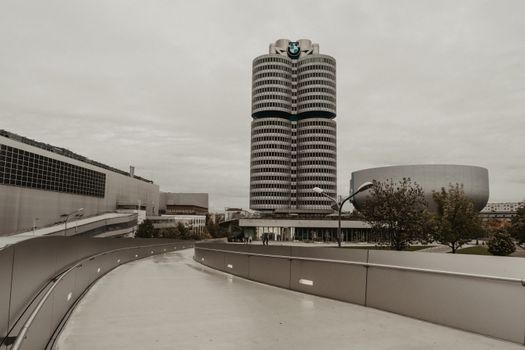 Photo: Masood Aslami / Pexels
Key Models and Ecosystems Driving German Corporate Innovation
 Photo: Paul Lichtblau / Pexels
Challenges and Best Practices for Sustainable Corporate Innovation Labs Germany
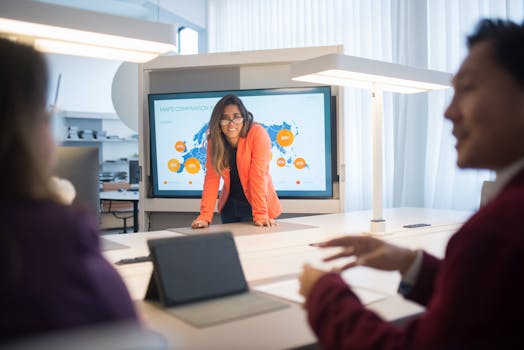 Photo: Kampus Production / Pexels
Maximizing Impact: Tips and Common Pitfalls for Innovation Labs
 Photo: Karolina Grabowska www.kaboompics.com / Pexels
Comparison
| Feature | Internal Incubator | External Accelerator | Co-creation Hub |
|---|---|---|---|
| Control over IP | High | Medium | Medium |
| Speed to Market | Medium | Fast | Medium |
| Risk Profile | Medium | Low (shared) | Medium |
| Talent Source | Internal | External Startups | Mixed |
| Integration Complexity | Medium | High (external) | Medium |
| Focus | Intrapreneurship | Startup Sourcing | Open Innovation |
| Primary Benefit | Culture Shift | Market Access | Ecosystem Leverage |
What Readers Say
"Our corporate innovation lab in Germany has been instrumental in developing our next-gen IoT solutions. It fostered a dynamic environment that simply wasn't possible within our traditional R&D department, leading to breakthroughs faster than anticipated."
Dr. Klaus Richter · Munich, Germany"The flexibility and autonomy offered by our innovation hub allowed our team to explore truly disruptive ideas. It's a fantastic model for German companies looking to stay ahead in a rapidly changing market."
Anja Müller · Berlin, Germany"Thanks to our corporate innovation lab, we successfully launched a new digital service that now accounts for 15% of our new revenue streams within two years. It's proof that dedicated innovation spaces work."
Thomas Schmidt · Stuttgart, Germany"While integrating lab innovations back into the core business had its challenges, the sheer volume of novel concepts and the fresh perspectives brought by our lab team made it a worthwhile investment for our long-term strategy."
Lena Wagner · Hamburg, Germany"Our finance sector innovation lab has dramatically improved our understanding of blockchain applications and AI in trading. It's not just about tech; it's about building a future-ready mindset across the organization."
Markus Lange · Frankfurt, GermanyFrequently Asked Questions
What exactly are corporate innovation labs in Germany?
Corporate innovation labs in Germany are dedicated organizational units, often semi-autonomous, established by large companies to foster disruptive innovation. They operate outside traditional structures to develop new products, services, or business models with greater agility and risk tolerance, often collaborating with startups and external experts.
Are these labs just a passing trend, or do they offer long-term value?
They offer significant long-term value. While the concept has evolved, the need for rapid innovation is permanent. These labs help German companies adapt to technological shifts, maintain competitive advantage, and cultivate an innovative culture, making them a crucial strategic asset for sustained growth, not just a trend.
How can a German company set up an effective innovation lab?
Setting up an effective lab involves defining a clear strategic mandate, securing strong executive sponsorship, establishing a semi-autonomous operational model, recruiting diverse and agile talent, and creating clear pathways for integrating successful innovations back into the core business or as spin-offs. Start small, iterate, and learn.
What is the typical investment required for a corporate innovation lab in Germany?
The investment varies widely based on scope, size, and industry. It can range from several hundred thousand euros for a small, focused team to several million for larger, multi-project hubs. Key cost drivers include talent, infrastructure, technology, and external partnerships. The focus should be on ROI, not just initial outlay.
How do corporate innovation labs differ from traditional R&D departments?
While both focus on development, innovation labs are typically more agile, risk-tolerant, and focused on disruptive or exploratory projects that might not fit traditional product roadmaps. R&D often focuses on incremental improvements and optimizing existing products, whereas labs seek entirely new solutions and business models.
Who should consider establishing a corporate innovation lab in Germany?
Any established German company facing rapid market changes, technological disruption, or needing to explore new growth avenues should consider an innovation lab. This includes sectors like automotive, manufacturing, finance, logistics, and energy, where staying ahead requires continuous, often radical, innovation.
What are the biggest risks associated with corporate innovation labs?
Major risks include 'innovation theater' (lack of real impact), isolation from the core business, failure to integrate successful projects, high costs without clear ROI, and cultural clashes. Mitigating these requires strong leadership, clear strategy, and robust integration mechanisms.
What future trends will impact corporate innovation labs in Germany?
Future trends include increased focus on AI, sustainability, quantum computing, and personalized experiences. Labs will likely become even more collaborative, leveraging global talent networks and open innovation platforms, and will need to adapt to even faster cycles of technological change and societal demands.
Ready to unlock the future of your business? Explore how corporate innovation labs in Germany can transform your strategy, drive growth, and secure your competitive edge. Contact us today to learn more about establishing or optimizing your innovation efforts.