Boost Growth with Corporate Innovation Consulting Germany
corporate innovation consulting Germany

Boost Growth with Corporate Innovation Consulting Germany

Expert guidance for German companies to navigate disruption, foster creativity, and achieve market leadership through innovation.

Innovate Your Future

Key Takeaways

  • ✓ Germany ranks among the top 10 most innovative economies globally.
  • ✓ Over 70% of German companies view innovation as critical for future success.
  • ✓ The average lifespan of a Fortune 500 company has decreased significantly, highlighting the need for continuous innovation.
  • ✓ Corporate innovation consulting can increase ROI on R&D by up to 30%.

How It Works

1
Discovery & Assessment

We begin with a deep dive into your current innovation landscape, identifying strengths, weaknesses, and untapped opportunities within your organization. This involves stakeholder interviews, market analysis, and technology assessments.

2
Strategy Co-Creation

Based on the assessment, we collaborate to develop a tailored innovation strategy aligned with your business objectives and market dynamics. This includes defining innovation priorities, target areas, and resource allocation.

3
Implementation & Incubation

Our consultants guide the execution of your innovation initiatives, from idea generation and prototyping to pilot projects and market launch. We help establish innovation processes, foster an innovative culture, and manage potential roadblocks.

4
Measurement & Optimization

We establish key performance indicators (KPIs) to track the success of your innovation efforts, providing continuous feedback and adjustments. This iterative approach ensures sustained innovation and measurable business impact.

The Imperative for Corporate Innovation Consulting in Germany
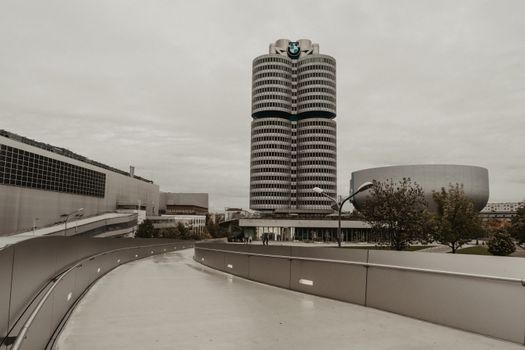
Explore the iconic modern architecture of the BMW headquarters in Munich, Germany. Photo: Masood Aslami / Pexels
Germany, often lauded as an industrial powerhouse and a beacon of engineering excellence, faces an increasingly complex global landscape. The traditional strengths that have long underpinned its economic success – precision manufacturing, robust export markets, and a highly skilled workforce – are now being challenged by rapid technological advancements, evolving consumer expectations, and fierce international competition. In this environment, corporate innovation is no longer a luxury but a fundamental necessity for survival and sustained growth. Corporate innovation consulting Germany has emerged as a critical partner for businesses seeking to navigate this intricate terrain. The demand for external expertise in fostering innovation stems from several key factors. Firstly, many established German corporations, while successful, are structured with hierarchical decision-making processes and established operational routines that can inadvertently stifle new ideas. Breaking free from these ingrained patterns requires an objective, outside perspective that can identify bottlenecks, challenge assumptions, and introduce fresh methodologies. Consultants bring a wealth of experience from diverse industries, offering proven frameworks and best practices that might not exist internally. Secondly, the pace of technological change is relentless. From artificial intelligence and blockchain to advanced robotics and sustainable energy solutions, new technologies are constantly reshaping markets and creating new business models. Keeping abreast of these developments, understanding their potential impact, and integrating them effectively into a corporate strategy is a monumental task. Corporate innovation consultants specialize in foresight and trend analysis, helping German companies not only react to change but proactively shape their future. They can identify emerging technologies relevant to specific sectors, evaluate their potential, and guide the development of strategies to leverage them for competitive advantage. Thirdly, the talent war for innovative minds is intensifying. Attracting and retaining individuals who can drive creativity and disruption is a global challenge. Consulting firms often have access to a broader network of experts and can help organizations build internal capabilities through training, workshops, and the implementation of innovation-friendly cultural practices. They can also assist in structuring internal innovation labs or venturing units, providing the necessary guidance to transform an idea into a marketable product or service. Finally, the global nature of innovation means that ideas and disruptions can originate from anywhere. German companies must not only look inward but also outward, understanding global innovation ecosystems and potential threats or opportunities. Corporate innovation consulting Germany offers that panoramic view, connecting local enterprises with global trends, insights, and potential partners. By embracing specialized consulting, German businesses can ensure they remain at the forefront of their industries, securing their position in the global economy and continuing their legacy of excellence into the next generation. It’s about transforming potential into tangible, market-leading solutions.

Crafting a Future-Proof Innovation Strategy for German Businesses

Three businessmen discussing financial documents in a modern office setting. Photo: Kampus Production / Pexels
Developing a robust innovation strategy is the cornerstone of any successful corporate transformation. For German businesses, this isn't just about incremental improvements; it's about reimagining core processes, exploring new value propositions, and potentially disrupting their own markets before others do. Corporate innovation consulting in Germany provides the structured approach and expert guidance needed to craft such a future-proof strategy. This involves a multi-faceted process that goes beyond simple brainstorming sessions. Firstly, strategic innovation begins with a comprehensive understanding of the current market and future trends. Consultants help German companies conduct in-depth market analyses, identifying unmet customer needs, emerging technologies, and shifts in competitive landscapes. This includes assessing the impact of global megatrends such as climate change, demographic shifts, and geopolitical dynamics on their specific industry. By understanding the 'white spaces' – areas where customer needs are underserved or entirely new markets can be created – companies can focus their innovation efforts more effectively. Secondly, a crucial element is the alignment of innovation goals with overall corporate objectives. An innovation strategy cannot operate in a silo. Consultants work closely with leadership to ensure that innovation initiatives directly support the company's long-term vision, whether that's expanding into new markets, improving operational efficiency, or developing sustainable products. This alignment ensures that resources are allocated wisely and that innovation efforts contribute directly to the bottom line. Thirdly, the development of an innovation portfolio is key. Not all innovation is created equal. A balanced portfolio includes incremental innovations (improving existing products/services), adjacent innovations (expanding into new markets or offering new solutions to existing customers), and disruptive innovations (creating entirely new markets or business models). Corporate innovation consulting Germany helps companies categorize and prioritize these initiatives, managing the inherent risks and potential rewards of each. This portfolio approach ensures a steady stream of new ideas while also fostering radical breakthroughs. Fourthly, establishing an innovation governance model is vital. This defines how innovation ideas are generated, evaluated, funded, and scaled within the organization. It includes setting up clear roles and responsibilities, decision-making processes, and metrics for success. Consultants assist in designing agile governance structures that can adapt to changing circumstances, ensuring that innovation doesn't get bogged down in bureaucracy. They also help foster an organizational culture that encourages experimentation, tolerates failure as a learning opportunity, and rewards creative thinking. Finally, the strategy must incorporate mechanisms for continuous learning and adaptation. The innovation landscape is dynamic, and a successful strategy must be flexible. Consultants help implement feedback loops, pilot programs, and iterative development cycles, allowing companies to test hypotheses, learn quickly, and pivot when necessary. This ensures that the innovation strategy remains relevant and effective in a constantly evolving business environment, providing German companies with the resilience and foresight needed to thrive.

Implementing Transformative Digital Innovation in German Corporates
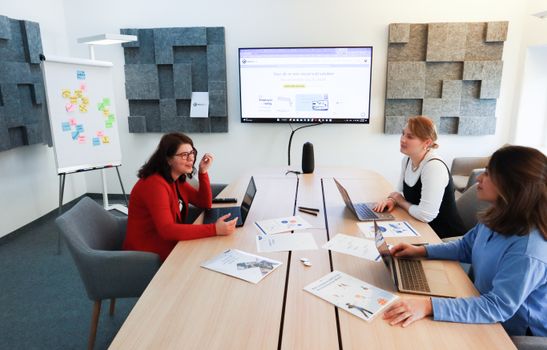
Three women in a modern office engaged in a business strategy discussion with laptops and a presentation screen. Photo: Walls.io / Pexels
Digital transformation is at the heart of modern corporate innovation, and for German corporates, embracing it is non-negotiable. While Germany has a strong manufacturing base, the integration of digital technologies across all business functions is often slower than in other leading economies. Corporate innovation consulting Germany plays a pivotal role in accelerating this digital shift, moving companies beyond traditional operational models to embrace data-driven decision-making, automation, and new digital service offerings. This transformation isn't just about adopting new software; it's about a fundamental change in how a business operates and creates value. The initial step in digital innovation often involves a comprehensive assessment of existing IT infrastructure and digital capabilities. Consultants help identify outdated systems, data silos, and areas where digital tools can significantly enhance efficiency and customer experience. This can range from optimizing supply chain management with AI and IoT to improving customer engagement through advanced CRM systems and personalized digital platforms. The goal is to create a seamless digital ecosystem that supports innovation and operational excellence. Furthermore, implementing transformative digital innovation requires a deep understanding of emerging technologies. Corporate innovation consultants bring expertise in areas such as artificial intelligence, machine learning, blockchain, cloud computing, and cybersecurity. They help German companies not only understand these technologies but also identify specific applications that can solve business challenges or create new revenue streams. For instance, AI can revolutionize predictive maintenance in manufacturing, while blockchain can enhance transparency and security in logistics.Corporate innovation often leverages these technologies to create entirely new business models. Another critical aspect is the development of digital skills within the workforce. Many traditional German companies face a talent gap in digital competencies. Consultants can design and implement training programs, foster a culture of continuous learning, and help integrate digital experts into existing teams. This capability building is essential for ensuring that digital innovations are not just implemented but are also sustained and evolved internally. It's about empowering employees to become digital champions and drivers of change. Moreover, digital innovation extends to creating new digital products and services. German companies, historically strong in hardware, are increasingly looking to complement their offerings with software and service components. Consultants guide the process of digital product development, from ideation and user experience design to agile development and market testing. This often involves establishing dedicated digital innovation labs or partnering with startups to accelerate the development cycle and bring new digital solutions to market quickly. The successful implementation of these initiatives can unlock significant new revenue opportunities and strengthen competitive positioning in a rapidly evolving digital economy.

Common Pitfalls and Best Practices in Corporate Innovation Consulting Germany

Team members analyzing technical schematics on office workspace. Ideal for business and engineering concepts. Photo: Pavel Danilyuk / Pexels
While the benefits of corporate innovation consulting are clear, the path to successful innovation is often fraught with challenges. German companies, with their strong emphasis on precision and established processes, can sometimes encounter specific pitfalls when embarking on innovation journeys. Understanding these and implementing best practices is crucial for maximizing the return on investment from consulting engagements. **Common Pitfalls:** * **Lack of Top-Management Buy-in:** Innovation efforts often fail when they are not fully supported by senior leadership. Without visible commitment and resource allocation from the top, initiatives can lose momentum. * **Resistance to Change:** Deep-rooted organizational cultures can resist new ideas, processes, and technologies. Fear of failure or comfort with the status quo can stifle creativity. * **Short-Term Focus:** Innovation is a long-term game. Expecting immediate, revolutionary results can lead to premature abandonment of promising projects that require more time to mature. * **Siloed Innovation:** Innovation efforts that are confined to a single department or team, without cross-functional collaboration, often struggle to gain traction or integrate effectively with the broader business. * **Insufficient Funding or Resources:** Under-resourcing innovation initiatives, both in terms of budget and skilled personnel, can severely limit their potential impact. * **Ignoring External Ecosystems:** Focusing solely on internal capabilities and neglecting partnerships with startups, universities, or research institutions can lead to missed opportunities. **Best Practices for Success:** * **Secure Leadership Commitment:** Ensure that innovation is a strategic priority championed by the CEO and executive board, with clear communication throughout the organization. * **Foster an Innovation Culture:** Encourage experimentation, provide psychological safety for risk-taking, celebrate successes, and learn from failures. Implement internal innovation challenges or hackathons. * **Adopt an Agile Mindset:** Embrace iterative development, rapid prototyping, and continuous feedback loops. Be prepared to pivot quickly based on market insights. * **Cross-Functional Collaboration:** Break down departmental silos. Create diverse innovation teams that bring together different perspectives and expertise from across the organization. * **Strategic Portfolio Management:** Balance incremental improvements with more disruptive, long-term bets. Diversify innovation investments to manage risk and maximize potential returns. * **Leverage External Ecosystems:** Actively seek out partnerships with startups, academic institutions, and technology providers. Engage in open innovation models to bring in fresh perspectives and capabilities. * **Measure and Learn:** Establish clear KPIs for innovation projects, track progress, and conduct regular post-mortems. Use data to refine strategies and improve future initiatives. * **Invest in Talent:** Continuously upskill your workforce in digital and innovation-related competencies. Attract and retain individuals with an entrepreneurial mindset. By proactively addressing these potential pitfalls and diligently implementing these best practices, German companies can significantly enhance their chances of success in their innovation endeavors, transforming challenges into opportunities for sustainable growth.

Comparison

FeatureSpecialized Innovation ConsultantGeneral Management ConsultantIn-House Innovation Team
Focus AreaDeep expertise in innovation methodologies, emerging tech, future trendsBroad strategic and operational improvementsSpecific to company's core business & existing knowledge
External Perspective✓ (Objective, cross-industry insights)✓ (Often less specialized in innovation)✗ (Potentially limited by internal biases)
Speed of ImplementationFast, leverages established frameworks and networksModerate, often requires internal alignmentVariable, depends on internal resources and agility
Cost-EffectivenessHigh ROI on specific innovation outcomesVariable, broader scope can incur higher overall costLower direct cost, but high opportunity cost if inefficient
Knowledge TransferStrong, builds internal capabilitiesModerate, focuses on project deliveryHigh, but can be limited by internal expertise

What Readers Say

"Our experience with corporate innovation consulting in Germany was transformative. They helped us identify entirely new market segments for our industrial machinery, leading to a 15% increase in new product revenue within two years. Their structured approach and deep market insights were invaluable."

Dr. Klaus Richter · Munich, Germany

"The consultants provided exceptional guidance in digitalizing our supply chain. Their expertise in AI and IoT enabled us to reduce operational costs by 20% and significantly improve efficiency. This corporate innovation consulting in Germany truly delivered tangible results."

Anja Müller · Hamburg, Germany

"We partnered with them for corporate innovation consulting in Germany to revitalize our R&D department. They introduced agile methodologies and fostered a culture of experimentation, which resulted in a 30% faster time-to-market for our new automotive components."

Markus Schmidt · Stuttgart, Germany

"While the initial phase took longer than expected due to internal complexities, the long-term strategic vision provided by the corporate innovation consulting team was precisely what our media company needed to stay competitive. The frameworks they introduced are now embedded in our daily operations."

Sophie Weber · Berlin, Germany

"As a medium-sized enterprise, we were hesitant about external consultants. However, the corporate innovation consulting in Germany we received was tailored perfectly to our needs, helping us launch a successful B2C digital service that significantly diversified our revenue streams."

Thomas Keller · Frankfurt, Germany

Frequently Asked Questions

What exactly does corporate innovation consulting in Germany entail?

Corporate innovation consulting in Germany involves external experts partnering with companies to foster new ideas, develop innovative products/services, and implement strategic changes to drive growth and competitive advantage. This can include market analysis, strategy development, digital transformation, cultural change, and the establishment of innovation processes.

Is corporate innovation consulting only for large corporations?

Not at all. While large corporations often engage innovation consultants, small and medium-sized enterprises (SMEs) in Germany can also greatly benefit. Consultants can provide specialized expertise and resources that smaller companies might lack internally, helping them compete effectively and scale their innovative ideas.

How do innovation consultants measure success?

Success is typically measured through a combination of quantitative and qualitative metrics. This can include increased revenue from new products/services, improved operational efficiency, enhanced market share, faster time-to-market for innovations, stronger innovation culture, and a measurable return on investment (ROI) for innovation projects.

What is the typical cost of corporate innovation consulting in Germany?

The cost varies significantly based on the scope, duration, and complexity of the project, as well as the consulting firm's reputation and expertise. Projects can range from tens of thousands for specific, short-term engagements to several hundred thousand or more for comprehensive, long-term strategic transformations. It's an investment aimed at significant future returns.

How is corporate innovation consulting different from general management consulting?

While there can be overlap, corporate innovation consulting has a specialized focus on fostering creativity, developing new business models, and implementing disruptive technologies. General management consulting often addresses broader operational, organizational, or financial issues, though some firms offer both specializations.

Who within my company should be involved in the consulting process?

For optimal results, key stakeholders from various levels and departments should be involved. This includes top leadership (CEO, board members), heads of R&D, product development, marketing, IT, and even front-line employees who can offer valuable insights into customer needs and operational challenges. Cross-functional engagement is crucial.

What are the risks of not investing in corporate innovation?

The primary risk is becoming obsolete in a rapidly changing market. Without continuous innovation, companies face declining competitiveness, loss of market share to more agile competitors, inability to attract top talent, reduced profitability, and ultimately, potential business failure. The cost of inaction often far outweighs the investment in innovation.

What are the future trends impacting corporate innovation consulting in Germany?

Future trends include the increasing importance of sustainability and circular economy principles, the accelerated adoption of AI and quantum computing, the growing need for robust cybersecurity measures in digital innovation, and the continued integration of human-centered design thinking to create more impactful and user-friendly solutions.

Ready to unlock your company's full innovation potential? Partner with leading corporate innovation consulting experts in Germany to navigate disruption, foster creativity, and secure a sustainable future for your business. Contact us today to start your transformative journey.

Topics: corporate innovation consulting Germanyinnovation strategy Germanydigital transformation Germanyinnovation management Germanybusiness growth Germany
Leo List
Brampton weed
Adultwork