Corporate Identity Design Germany: Build a Powerful Brand
corporate identity design Germany

Corporate Identity Design Germany: Build a Powerful Brand

Craft a unique and memorable corporate identity that resonates with the German market and drives business success.

Start Your Brand Journey

Key Takeaways

  • ✓ Germany's emphasis on quality and precision extends to corporate identity.
  • ✓ A strong CI is crucial for establishing trust and credibility in the German market.
  • ✓ Cultural nuances significantly impact design effectiveness in Germany.
  • ✓ Digital presence and consistency are paramount for modern German corporate identities.

How It Works

1
Discovery & Research

We begin with in-depth research into your business, target audience, and competitive landscape. This phase defines your brand's core values and unique selling propositions.

2
Strategy & Concept Development

Based on our findings, we develop a comprehensive brand strategy and initial design concepts. This includes defining your brand's personality, tone of voice, and visual direction.

3
Design & Implementation

Our expert designers bring your corporate identity to life across all touchpoints, from logo and typography to website and marketing materials. We ensure consistency and adherence to brand guidelines.

4
Launch & Evolution

We assist with the successful launch of your new corporate identity and provide guidance for ongoing brand management. A strong CI is a living entity that evolves with your business.

Understanding the German Market for Corporate Identity Design
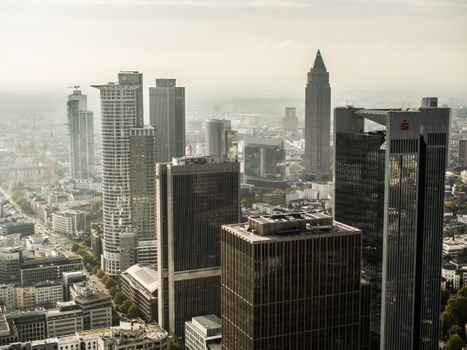
Aerial view of Frankfurt's skyscraper-filled skyline under a hazy sky. Photo: Jakob Schlothane / Pexels
In the highly competitive and sophisticated German market, a strong corporate identity (CI) is not merely a visual adornment; it is a fundamental pillar of business success. German consumers and B2B clients alike place a high value on quality, reliability, and precision. This ethos extends directly to how they perceive brands. A well-crafted corporate identity communicates professionalism, trustworthiness, and attention to detail – qualities that are highly respected and expected in Germany. Unlike some markets where flashy or overly abstract designs might gain traction, the German preference often leans towards clear, functional, and purposeful aesthetics. This doesn't mean boring; it means design that serves a clear objective and communicates effectively without unnecessary embellishment. The cultural landscape also plays a significant role. German business culture, while increasingly globalized, still retains a strong sense of tradition and formality. Your corporate identity must navigate this balance, projecting a modern, innovative image while also conveying reliability and established expertise. This often translates into logos that are clean and legible, color palettes that are sophisticated rather than overtly playful, and typography that is strong and authoritative. Furthermore, the legal landscape, particularly concerning trademarks and intellectual property, necessitates a meticulous approach to design development. Ensuring your corporate identity is unique, legally defensible, and culturally appropriate is paramount to avoiding costly disputes and establishing long-term brand equity. For companies targeting this region, understanding these nuances is the first step towards a successful branding endeavor. It involves more than just translating your existing brand; it's about transcreating it – adapting it culturally to resonate deeply with the German psyche. This holistic approach to corporate branding ensures that every element of your identity, from your business cards to your digital presence, speaks directly to the values and expectations of your German audience. Without this deep understanding, even the most aesthetically pleasing designs can fall flat, failing to connect and build the necessary trust that is the bedrock of business relationships in Germany. Therefore, investing in expert corporate identity design in Germany is an investment in market entry, growth, and sustained success.

Key Elements of a Powerful Corporate Identity in Germany

Close-up of 'Brand Personality & Visual Identity' text in red on white paper. Photo: Eva Bronzini / Pexels
Developing a robust corporate identity for the German market requires careful consideration of several interconnected elements, each contributing to the overall brand perception. At its core, a corporate identity encompasses more than just a logo; it's the sum total of how your company presents itself, both internally and externally. The primary visual element, the logo, must embody clarity and purpose. German design often favors geometric precision, balanced proportions, and a sense of enduring quality. It should be easily recognizable, scalable across various applications, and communicate the essence of your brand without relying on fleeting trends. Complementing the logo, typography plays a critical role. Choosing the right fonts can convey authority, innovation, or friendliness. In Germany, legibility and professionalism are often prioritized, with sans-serif fonts often favored for their clean, modern appeal, though well-executed serifs can convey tradition and trustworthiness. The color palette is another crucial component, influencing emotional responses and brand recall. German design often utilizes muted, sophisticated palettes, but vibrant colors can be employed strategically to convey innovation or specific industry associations, always with an eye towards balance and harmony. Beyond these core visual aspects, the corporate identity extends to brand messaging and tone of voice. How your company communicates, whether in marketing materials, customer service, or internal communications, must align with your visual identity. German communication tends to be direct, factual, and precise, shying away from hyperbole. Your brand's language should reflect this, fostering trust through clarity and authenticity. Furthermore, the application of your corporate identity across all touchpoints is paramount. This includes everything from stationery and business cards to website design, social media profiles, product packaging, and even the interior design of your offices. Consistency across these diverse platforms reinforces your brand message and builds a cohesive, professional image. Any deviation can dilute your brand's impact and create confusion. For instance, a beautifully designed logo on a poorly constructed website will undermine the perceived quality of your brand. Therefore, a comprehensive brand guideline document is indispensable. This document serves as the bible for your corporate identity, outlining rules for logo usage, color codes, typography, imagery style, and tone of voice, ensuring every interaction with your brand is consistent and impactful. This meticulous approach to every detail is what sets apart successful corporate identity design in Germany.

Strategic Advantages of Strong Corporate Identity Design for German Businesses

Four women in an office celebrating success and teamwork with enthusiasm. Photo: Kampus Production / Pexels
Investing in professional corporate identity design offers numerous strategic advantages for businesses operating in or targeting the German market. Firstly, it significantly enhances brand recognition and recall. In a crowded marketplace, a distinctive and consistent corporate identity helps your business stand out, making it easier for potential customers to identify and remember your brand amongst competitors. This is particularly vital in Germany, where consumers often conduct thorough research before making purchasing decisions and tend to stick with trusted brands. Secondly, a well-defined corporate identity builds trust and credibility. Germans value authenticity and reliability. A coherent and professional brand image signals that your company is serious, well-organized, and committed to quality. This perception of trustworthiness is a powerful competitive differentiator, influencing purchasing decisions and fostering long-term customer loyalty. When your visual and verbal identity aligns with your business values and promises, it creates a powerful sense of integrity that resonates deeply with the German audience. Thirdly, a strong CI facilitates effective communication. By establishing clear visual and verbal guidelines, it ensures that all your marketing and communication efforts are consistent and on-message. This eliminates confusion, strengthens your brand narrative, and allows your target audience to quickly grasp what your business stands for and what it offers. This clarity is especially important in a market that appreciates directness and precision in communication. Fourthly, it attracts and retains top talent. A compelling corporate identity doesn't just appeal to customers; it also positions your company as an attractive employer. Talented professionals are often drawn to organizations with a clear vision, strong values, and a professional image. In Germany's competitive talent market, a powerful employer brand, underpinned by a solid corporate identity, can be a significant advantage in recruitment and retention. Finally, a robust corporate identity provides a solid foundation for future growth and expansion. As your business evolves and potentially enters new markets or introduces new products, a flexible yet consistent brand framework allows for seamless adaptation. It ensures that your core brand essence remains intact while accommodating necessary changes. This strategic foresight in brand development is crucial for sustainable success in a dynamic economic environment. Ultimately, a strategically designed corporate identity is an invaluable asset that drives perception, builds relationships, and underpins the long-term success of any business in Germany.

Avoiding Common Pitfalls in German Corporate Identity Design
Yellow block letters spelling 'error' on a vibrant pink background, capturing a playful message. Photo: Ann H / Pexels
While the benefits of a strong corporate identity are clear, several common mistakes can undermine even the most well-intentioned design efforts, especially when targeting the German market. Awareness of these pitfalls is crucial for a successful outcome. **1. Underestimating Cultural Nuances:** * **Mistake:** Directly translating or imposing a brand identity from another culture without local adaptation. For example, using overly flashy colors or informal language that might be perceived as unprofessional in Germany. * **Solution:** Engage with local experts or agencies that understand German cultural values, design aesthetics, and communication styles. Conduct thorough market research to ensure cultural appropriateness. **2. Lack of Consistency:** * **Mistake:** Inconsistent application of brand elements (logo, colors, fonts, tone of voice) across different channels and materials. This leads to a fragmented and unprofessional brand image. * **Solution:** Develop comprehensive and easily accessible brand guidelines. Train all internal and external stakeholders on brand usage and enforce strict adherence to these guidelines. **3. Overly Complex or Trendy Designs:** * **Mistake:** Opting for designs that are overly intricate, difficult to reproduce, or follow fleeting trends. German design often values timelessness and functionality over transient fads. * **Solution:** Aim for clarity, simplicity, and longevity. A well-designed CI should be robust enough to stand the test of time and be easily applied across diverse mediums. **4. Neglecting Digital Presence:** * **Mistake:** Focusing solely on traditional print materials while overlooking the importance of a consistent and optimized digital identity (website, social media, email signatures). * **Solution:** Ensure your corporate identity is fully integrated and optimized for all digital platforms, reflecting the same professionalism and quality as your offline materials. **5. Ignoring Legal Considerations:** * **Mistake:** Failing to conduct proper trademark searches or overlooking German specific legal requirements for branding elements. * **Solution:** Consult with legal experts specializing in intellectual property in Germany to ensure your brand elements are unique, registrable, and legally protected.

Comparison

FeatureExpert German AgencyFreelance Designer (Non-German)In-house Design Team
Cultural UnderstandingDeep and intuitiveLimited, often requires client inputPotentially good, but can lack external perspective
Market ExperienceExtensive, with German market insightsVaried, depends on individual experienceSpecific to company's industry
CostHigher initial investmentPotentially lower, but variable qualityOngoing salary + overhead
Speed & AgilityEfficient, streamlined processCan be slower or faster depending on availabilitySubject to internal priorities
Legal & ComplianceKnowledgeable of DE regulationsMay require external legal adviceRequires dedicated legal oversight
Holistic Strategy
Scalability

What Readers Say

"Our new corporate identity designed for the German market has been a game-changer. The agency truly understood our values and translated them into a professional, trustworthy brand that resonates with our clients."

Dr. Klaus Richter · Munich, Bavaria

"The team delivered an outstanding corporate identity design in Germany that perfectly captures our innovative spirit while maintaining the precision expected here. We've seen a noticeable increase in brand recognition."

Anja Müller · Hamburg, Germany

"Thanks to their strategic corporate identity design, our B2B lead generation improved by 20% in the first six months. The consistency across all our materials has built immense confidence with our German partners."

Stefan Schmidt · Berlin, Germany

"While the initial concepts were a bit more traditional than we hoped, the final corporate identity design for our German startup is incredibly effective. It balances modern appeal with the reliability German customers appreciate."

Lena Wagner · Cologne, Germany

"As a financial services firm, trust is paramount. Their corporate identity design for our German operations conveyed exactly that – professionalism, stability, and integrity. It has been invaluable in client acquisition."

Michael Fischer · Frankfurt, Germany

Frequently Asked Questions

What is corporate identity design and why is it important for businesses in Germany?

Corporate identity design encompasses all visual and non-visual elements that define a company's unique image, including logo, typography, color palette, messaging, and overall communication style. In Germany, it's crucial because it builds trust, signals professionalism, and helps businesses stand out in a market that highly values quality, reliability, and clear communication. A strong CI is a cornerstone for market acceptance and long-term success.

How long does it take to develop a comprehensive corporate identity in Germany?

The timeline for developing a comprehensive corporate identity can vary significantly depending on the complexity of the project, the size of the company, and the scope of deliverables. Typically, a full corporate identity design process, from discovery to final guidelines, can take anywhere from 8 to 24 weeks. This includes research, strategy, concept development, design iteration, and implementation across various touchpoints.

What are the typical steps involved in a corporate identity design project?

A typical corporate identity design project involves several key steps: initial discovery and research to understand the business and market; strategic development to define brand values and positioning; concept creation for visual and verbal elements; design refinement and application across various materials; and finally, the creation of brand guidelines for consistent implementation. This structured approach ensures a cohesive and effective outcome.

What is the cost of corporate identity design services in Germany?

The cost of corporate identity design in Germany can range widely, from a few thousand euros for basic packages from freelance designers to tens of thousands or even hundreds of thousands for comprehensive projects by established agencies. Factors influencing cost include the scope of work, the agency's reputation and experience, the number of deliverables, and the complexity of the brand. Investing in professional design is an investment in your brand's future.

How does corporate identity design differ from branding?

While often used interchangeably, corporate identity is a key component of branding. Branding is the broader strategic process of shaping public perception and creating emotional connections, encompassing everything from brand values to customer experience. Corporate identity, on the other hand, refers specifically to the tangible visual and verbal elements (logo, colors, typography, messaging) that represent the brand. A strong CI is essential for a successful branding strategy.

Who should consider professional corporate identity design in Germany?

Any business looking to establish a strong, credible, and recognizable presence in the German market should consider professional corporate identity design. This includes new startups aiming to make a strong first impression, established companies undergoing a rebrand, or international businesses entering the German market. It's especially crucial for those in competitive industries or sectors where trust and quality are paramount.

How can I ensure my corporate identity design is legally protected in Germany?

To ensure your corporate identity design is legally protected in Germany, it is vital to conduct thorough trademark searches before finalizing any brand elements, especially your logo and brand name. Registering your trademarks with the German Patent and Trade Mark Office (DPMA) and potentially the European Union Intellectual Property Office (EUIPO) is crucial. Consulting with a German intellectual property lawyer is highly recommended to navigate these complexities and secure your brand's legal rights.

What are the future trends in corporate identity design for the German market?

Future trends in corporate identity design for the German market are likely to emphasize sustainability, digital-first adaptability, and authentic storytelling. Brands will increasingly use their identity to communicate environmental responsibility and social impact. Designs will need to be highly flexible for diverse digital platforms, and storytelling will move beyond mere product features to connect with consumers on a deeper, values-driven level. Personalization and interactive elements will also gain prominence.

Ready to elevate your business and forge a powerful connection with the German market? Invest in expert corporate identity design in Germany. Contact us today to discuss how a strategically crafted brand can drive your success and build lasting trust with your audience.

Topics: corporate identity design Germanybrand strategy GermanyGerman branding agenciescorporate design developmentGerman market branding
Leo List

DK Escorts LU Escorts AT Escorts SE Escorts FI Escorts CH Escorts DE Escorts HR Escorts IE Escorts GR Escorts CZ Escorts NO Escorts BE Escorts FR Escorts SI Escorts IL Escorts NL Escorts PL Escorts HU Escorts ES Escorts IT Escorts PT Escorts SK Escorts RO Escorts ZA Escorts UY Escorts US Escorts UK Escorts NZ Escorts AU Escorts
Brampton weed
Adultwork EstrelaBet Vai de Bet R7 Bet Betão Galera Bet Rainbet Bet9ja Shop SportyBet BetKing Sisal Loto Foot Hollywoodbets YesPlay Odibets RushBet Jugabet BetWarrior BetCity MSport betPawa Fortebet